
Lodi Root Zone Calculation for TPZ Fencing: Compliance Guide
Lodi Lake Fence Rentals specializes in accurate Root Zone Calculation for TPZ fencing in Lodi, CA. Serving neighborhoods like Downtown Lodi, Hale Park, and the Heritage District, we navigate local climate challenges including moderate flood zones and common suburban buildings from 1980-2000. Our expertise ensures compliance with municipal regulations, protecting your property and avoiding costly fines.
Root Zone Calculation Essentials for TPZ Fencing in Lodi
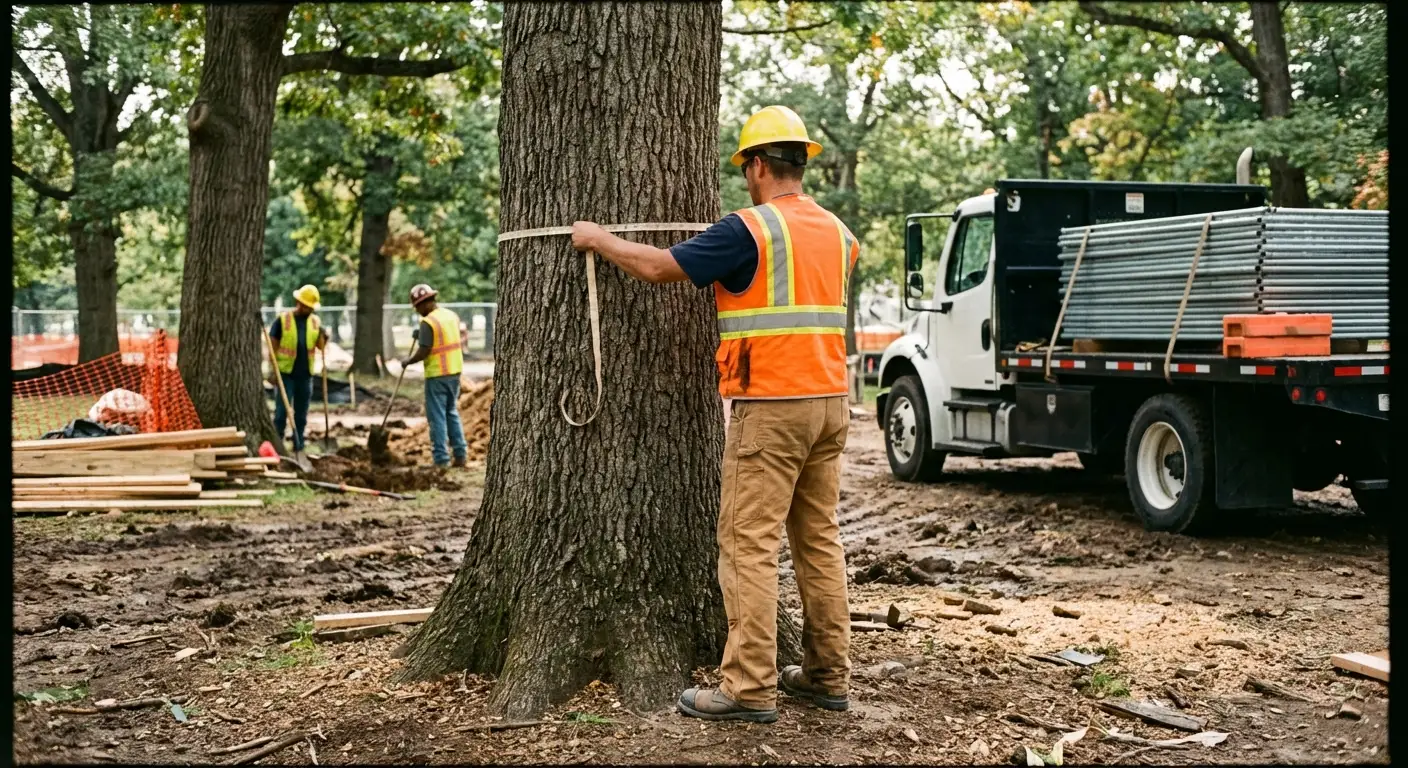
In Lodi’s moderate flood zone and clay-heavy soils, accurate root zone calculation prevents damage to protected trees during construction. We start by identifying the tree’s dripline—often wider than it appears—then add a mandatory buffer. Our crew uses calibrated measuring wheels and site plans to mark boundaries before installing tree protection zone fencing. This approach keeps projects compliant with local ordinances and avoids fines. We’ve deployed TPZ systems across Hale Park, Hale Park, and the Heritage District, adapting to each site’s root sensitivity.
Calculation Steps
- Confirm tree species and drip line extent per Lodi municipal code
- Measure minimum 18-inch root zone buffer beyond canopy edge
- Verify soil compaction limits using a penetrometer before panel placement
| Factor | Lodi-Specific Requirement |
|---|---|
| Minimum Root Zone Radius | 18 inches beyond dripline |
| Soil Disturbance Limit | No compaction below 200 psi |
| Fence Base Type | Non-penetrating concrete-steel bases only |
Root Zone Calculation for TPZ Fencing in Lodi, CA
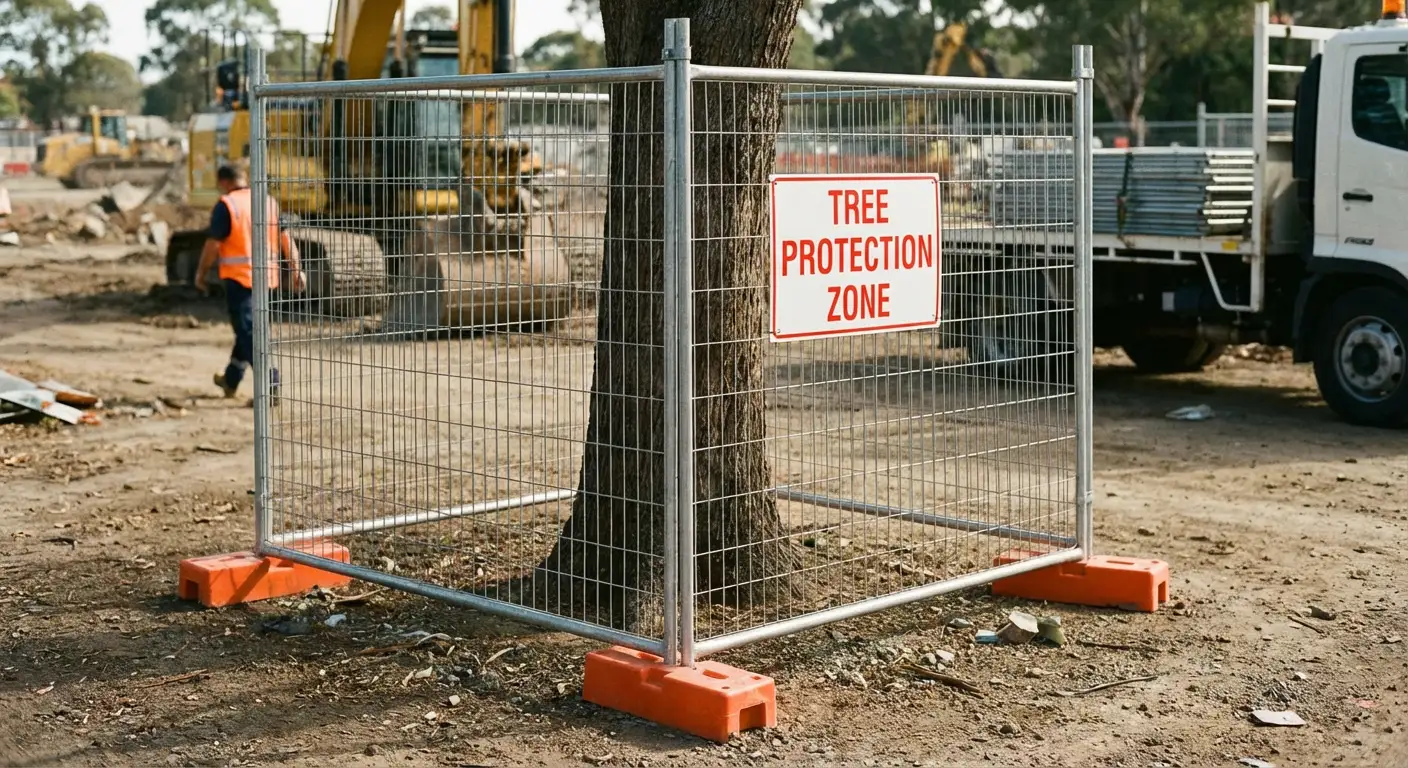
Root zone calculation for TPZ fencing starts with tree size, trunk diameter, and site disturbance in neighborhoods like Heritage District and Vinewood. In Lodi’s moderate flood zone and 7.5 inches of annual precipitation, crews watch for soft edges after watering or rain because soil packs down fast under panels and gate posts. The fence line stays outside the critical root radius, with adjustments for Lodi Lake Park access, haul paths, and any existing hardscape. TPZ layout also has to fit around tree protection ordinances in Heritage District, tree protection zones in Vinewood, zero-trip-hazard panels in Hale Park, concrete steel bases at Lodi Lake Park, and SWPPP dust compliance near Lodi Lake Park. Crews mark the root zone before delivery, then verify clearance after panel set and gate swings.
Key Terminology
- root protection zone
- The protected soil area around a tree in Heritage District used to keep roots from being cut, compacted, or trench-damaged.
- critical root radius
- A field measurement from trunk center used in Lodi Lake Park jobs to set the fence line outside major root concentration.
- TPZ fencing
- Temporary fencing installed around trees in Vinewood or Hale Park to keep equipment, storage, and foot traffic out of the root area.
- root plate
- The visible or near-surface root spread that matters in Lodi’s 1138 cooling degree day summers, where dry soil shifts fast.
- dripline
- The outer edge of the canopy used as a field reference in Lodi Lake Park, though roots often extend beyond it.
- compaction buffer
- Extra space left outside the fence in Hale Park so soil stays open under pallets, gates, and panel handling.
In Simple Terms
TPZ fencing is set by measuring the tree’s root area first, then placing panels outside that space. In Lodi Lake Park, Hale Park, Heritage District, and Vinewood, crews keep loads, staking, and gate traffic away from roots because dry summer soil and compacted infill ground can stress trees fast. The layout has to follow local tree rules, leave room for access, and avoid digging into the protected zone.
Root Zone Calculation for TPZ Fencing in Lodi, CA — Part 2
Use trunk diameter, site conditions, and local tree protection rules to set TPZ fencing around roots in Lodi, CA.
| Root protection zone basis | Tree trunk diameter at breast height multiplied by 12 to 18 for TPZ fencing layout: $150-$275 |
|---|---|
| Fence offset from trunk | Set temporary fencing at the calculated root zone edge, with extra clearance near mature oaks and creekside trees: $180-$320 |
| Slope and drainage adjustment | Increase setback where runoff from Lodi’s moderate flood zone and clay soils concentrates near roots: $120-$240 |
| Site access control | Use weighted panels and locked gate sections for work areas near Heritage District and Vinewood streets: $220-$390 |
| Inspection and compliance check | Verify fence placement against arborist notes, OSHA site controls, and municipal tree-protection requirements: $175-$300 |
| TPZ signage and marking | Install visible root zone markers and no-entry tags for preservation areas near the Mokelumne River corridor: $90-$165 |
| Signage Interval | Every 30 linear feet |
Root Zone Calculation for TPZ Fencing in Lodi
Ensure compliance with local tree protection regulations.
Stop Guessing Your Tree Protection Zone Boundaries
I remember a job near Hale Park where a crew ignored the root radius. They ended up destroying a hundred-year-old tree just by setting posts too deep. Don't make that mistake.
Guessing the Critical Root Radius
We've seen crews in Vinewood drive posts too close to old oaks, causing irreversible root damage and heavy fines from city inspectors during site audits.
Consult tree protection ordinances to calculate the exact drip line before setting any post-driven fence.
Ignoring Soil Compaction Near the TPZ
Heavy machinery moving near the zone crushes the air pockets trees need to breathe. This kills the tree long after your temporary gates leave the site.
Use zero trip hazard equipment and lightweight chain link panels to minimize ground pressure.
Using Improper Fence Base Weights
In Lawrence Park, wind gusts can tip standard bases into the root zone. This creates deep gouges in the soil that expose sensitive feeder roots to the air.
We install concrete steel bases that sit on top of the ground rather than digging into the sensitive root area.
Neglecting the Drip Line Buffer
Setting up tree protection zones right at the edge of the canopy leaves no room for error. One heavy rain in Hale Park causes runoff that erodes the root collar.
Always extend your fencing at least two feet beyond the visible drip line to allow for natural water runoff and soil movement.
Failing to Account for Seasonal Soil Shrinkage
Lodi's dry summers shrink the soil. If your crowd control barricades aren't positioned correctly, the shifting earth can pull fence posts right out of the ground, creating hazards.
Review safety standards regarding soil stability and adjust your TPZ boundaries based on the current moisture levels.
Root Zone Calculation for TPZ Fencing: Compliance Guide
Root zone calculations form the backbone of proper TPZ fencing installation, especially in Lodi’s varied climate and moderate flood zones. We rely on precise measurements to protect tree health while meeting safety standards. Our approach balances regulatory compliance with practical site conditions, ensuring fences don’t harm roots beneath or create hazards aboveground. This method preserves urban greenery near landmarks like The Grape Bowl and in neighborhoods such as Downtown Lodi and Heritage District, where construction and preservation must coexist.
-
Measure Tree Diameter Accurately
Calculating the root protection zone starts with measuring the tree’s diameter at breast height (DBH). This ensures fence placement respects the critical root area, avoiding damage during construction or events.In PracticeFor a 24-inch DBH oak near Hale Park, we set fences at least 12 feet out to protect roots, following standard TPZ guidelines.
-
Adjust for Local Soil and Climate Conditions
Lodi’s 7.5 inches of annual precipitation and moderate flood risks affect root spread and soil stability. We factor these into TPZ fencing layouts to prevent water pooling and root suffocation.In PracticeNear The Grape Bowl, we installed drainage-friendly bases to maintain fencing stability without compromising the root zone.
-
Use Durable, Non-Invasive Fencing Bases
Concrete or steel bases must support fences without trenching or driving that damages roots. We select bases that stabilize fences while preserving soil integrity in TPZs.In PracticeWe often rely on concrete-steel bases for fencing in Downtown Lodi’s flood-prone areas.
-
Maintain Compliance with Tree Protection Ordinances
Local ordinances require clear boundaries around root zones during construction. Our calculations align with municipal codes to avoid fines or delays.In PracticeIn the Heritage District, we verified all TPZ fencing met city requirements before starting work, preventing project interruptions.
Our crew commits to detailed root zone assessments before any TPZ fencing goes up. We use industry-standard formulas and local knowledge to adapt fencing layouts to each site’s unique tree protection needs. By integrating this with sturdy base options and wind resistance features, we ensure fences remain secure without compromising root systems or site safety. This hands-on approach reflects our experience and respect for Lodi’s landscape and regulations.
Root Zone Calculation for TPZ Fencing: Compliance Guide — Part 2
Guidance on root zone dimensions for temporary protective zone fencing in Lodi’s varied neighborhoods and soil conditions.
What defines the root zone for TPZ fencing in Lodi?
The root zone extends 18 inches beyond the fence base to protect underground utilities and tree roots near Lawrence Park and Hale Park installations.
How does Lodi’s climate affect root zone calculations?
With 7.5 inches of annual precipitation and 18 freeze days, soil stability in Downtown Lodi requires adjusted footing depths to prevent fence shift.
Are older homes in Lodi subject to different TPZ rules?
Homes built 1980–2000 in westward expansion zones follow current TPZ standards, but may need soil tests if near Wine & Roses utility corridors.
Does flood risk change root zone requirements?
Lodi’s moderate flood zone status mandates elevated footings in Hale Park and areas east of the railroad to maintain fence integrity during saturation.
What local landmarks influence TPZ placement rules?
Near Lawrence Elementary School and Wine & Roses, setback lines increase to preserve sightlines and comply with Lodi municipal landscape codes.
How are root zones verified during inspection?
Lodi building inspectors measure from the fence post center to ensure 18-inch clearance from protected roots, especially in established neighborhoods like Lawrence Park.
TPZ Fence Root Zone Compliance for Lodi Projects
Use root zone calculations to set tree protection fencing, reduce site damage, and meet local compliance requirements in Lodi, CA.
Local support for compliant fencing near Lodi Lake and downtown Lodi.